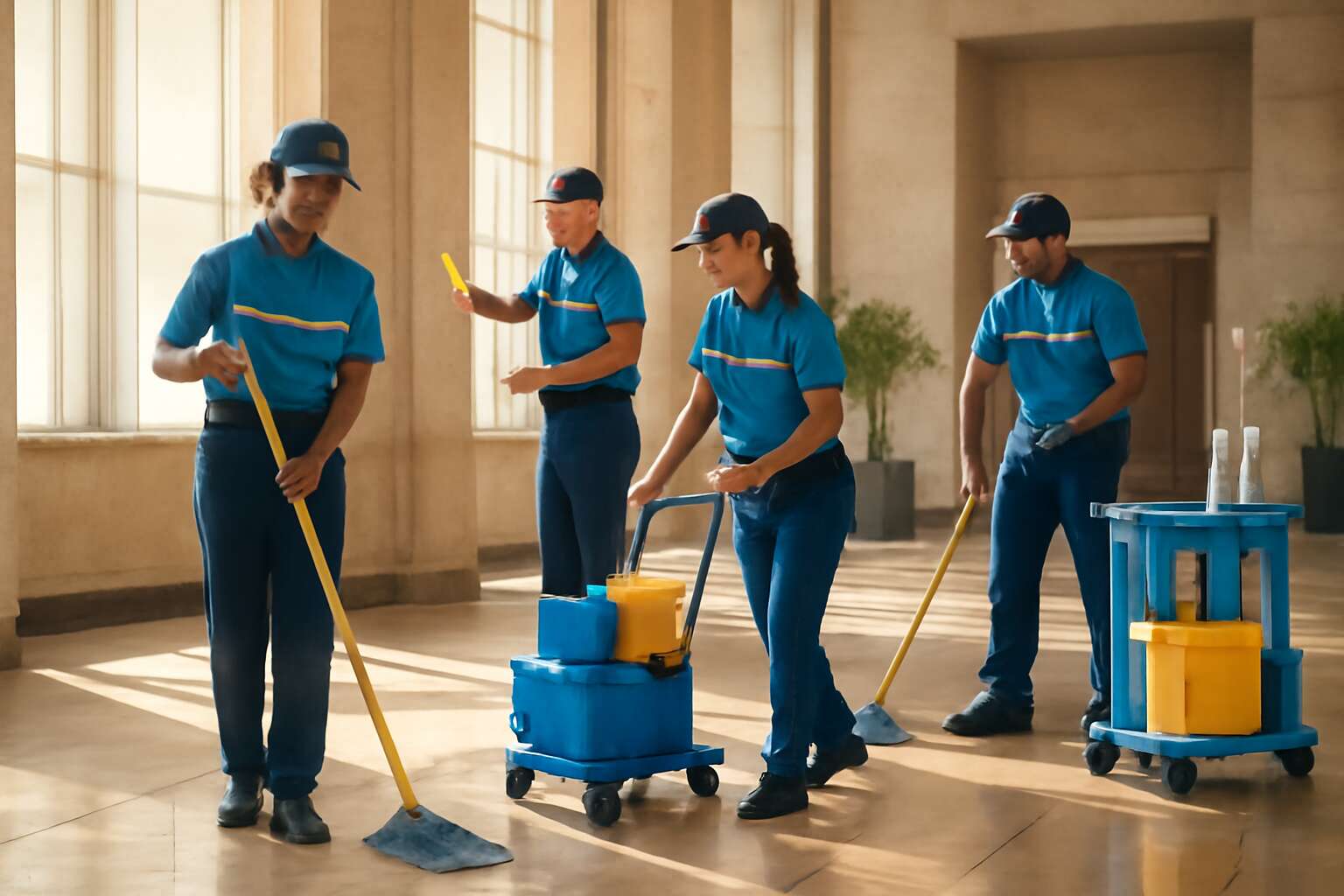
Overview of Cleaning Careers in the Public Sector
Roles in Government Cleaning Teams
In South Africa, clean government facilities aren’t just tidy—they’re the quiet engine of public service. Clean spaces cut illness and downtime, by up to 15%, according to facility managers. For those exploring cleaning jobs for government, stability and service go hand in hand!
Public sector cleaning teams revolve around a few core roles that keep offices, clinics, and transit hubs up to standard:
- Cleaning attendants who handle daily sweeps, dusting, and waste management
- Supervisors who schedule shifts, train new staff, and ensure compliance
- Facilities maintenance officers who oversee hygiene programs and contracts
These roles span schools, government offices, health facilities, and municipal depots across the country, offering varied environments and opportunities for career paths. Training and portability of skills mean a cleaner can rise to lead teams, coordinate safety protocols, or oversee essential sanitation programs in public spaces.
Key Qualifications for Public Sector Cleaning Jobs
In South Africa, clean spaces are more than neat—they’re a quiet engine of public service. “Public facilities cut illness and downtime by up to 15% when cleanliness is prioritized,” facility managers note, and the impact is tangible. For those pursuing cleaning jobs for government, stability and service go hand in hand, touching clinics, schools, and transit hubs every day.
Overview of Cleaning Careers in the Public Sector: Opportunities span a spectrum from hands-on attendants to shift supervisors and facilities maintenance officers who coordinate contracts and hygiene programs. The public sector offers steady hours, varied environments, and pathways that reward reliability, meticulous care, and a habit of lifelong learning.
Key Qualifications for Public Sector Cleaning Jobs:
- Consistent reliability and punctual attendance
- Sharp attention to detail and hygiene standards
- Foundational safety training and compliance awareness
- Clear communication and teamwork skills
- Commitment to ongoing training and upskilling
Work Environments in Government Facilities
In government facilities, cleanliness is the quiet hinge that keeps services moving. A facilities manager notes that clean spaces cut illness and downtime by up to 15%, and the impact is tangible in crowded offices, clinics, and transit hubs. It’s work that tests character as much as technique.
For cleaning jobs for government, the range of environments is broad—from bustling municipal offices to public libraries and secure archives. The pace rewards steady reliability, respect for privacy, and a steadiness under pressure that outlasts the clock.
- High-traffic public areas requiring rapid, repeated cleaning cycles
- Secure zones with restricted access and sensitive information handling
- Facilities with specialized hygiene standards or hazardous waste protocols
These roles carry a quiet responsibility—keeping spaces safe and welcoming for citizens. In this field, the work endures, and the public feels the difference even when it goes unseen. That essence—service as stewardship—defines cleaning jobs for government.
Career Path and Advancement in Public Sector Cleaning
Across South Africa’s government spaces, cleanliness is more than neatness—it’s a quiet engine of service. Clean spaces cut illness and downtime by up to 15%, a figure echoed by facilities managers who call cleanliness the backbone of daily operations. “Cleanliness is service in motion,” a supervisor notes, and the truth lands in crowded town halls, clinics, and transit hubs alike.
- Entry-level cleaner or ward attendant
- Senior cleaner or shift supervisor
- Facilities officer or team leader
- Facilities manager or operations supervisor
- Specialist roles (hygiene compliance, hazardous-waste handling)
In cleaning jobs for government, the career path rewards reliability, privacy respect, and steady growth—often through on-the-job training, in-house apprenticeships, and civil-service schemes that shepherd skilled staff into management and policy-support roles. The journey from entry to leadership is marked by mentorship, cross-department collaboration, and a shared pride in public-space stewardship.
Job Opportunities Across Government Agencies
Custodial Positions in Municipal Buildings
Clean spaces ignite civic trust, and across South Africa’s municipalities, well-kept government buildings stand as quiet sentinels of pride. In the realm of cleaning jobs for government, every corridor tells a story of reliability and care.
Across agencies and municipal facilities, opportunities bloom for custodians who value steadiness and service.
- Municipal buildings like town halls, libraries, and public clinics
- Courthouses, police stations, and justice complexes
- Schools and community centers under district administration
As you move through a career in cleaning within government, the environment rewards reliability, teamwork, and a calm, methodical approach. Each day becomes a contribution to safety, comfort, and the everyday efficiency of public life.
Janitorial Roles in Federal Agencies
“Clean spaces are the quiet infrastructure of trust,” a public administrator once said. Across government spaces, well-kept offices signal reliability and civic care. In South Africa, opportunities span agencies at national, provincial, and local levels for janitorial roles that keep operations smooth and safe.
From federal agencies to local departments, demand covers custodial services, facilities maintenance, and routine upkeep that public employees rely on daily.
- Federal agencies and national departments
- State, provincial, and municipal offices
- Public schools and universities
- Healthcare facilities and clinics
- Public safety complexes and courthouses
These roles reward reliability, teamwork, and a calm, methodical approach. For many, these roles are among the accessible cleaning jobs for government that offer steady hours and direct public service.
Cleaning Technician Roles in State Offices
Clean spaces are the quiet infrastructure of trust. Across South Africa’s state offices, dedicated cleaning technicians keep corridors bright and public services moving. These are prime examples of cleaning jobs for government, offering steady hours, predictable shifts, and the chance to serve communities daily. In provincial and municipal centers, teams tidy offices, classrooms, waiting areas, and clinics, turning public spaces into welcoming places for citizens, even before the morning rush.
Key duties in state offices include:
- Floor care and surface cleaning
- Restroom sanitation and supply replenishment
- Waste management and recycling coordination
Career growth often tracks with training in safety, equipment handling, and small-team supervision, guiding cleaners toward facilities support roles or supervisory positions within the public sector. It’s work that blends humility with pride, a daily rhythm that keeps government functioning with care.
Contracted Cleaning Services for Government Properties
A clean government building is the first line of public trust. Across South Africa, contracted cleaning services keep offices, clinics, and citizen hubs tidy and functional. These are cleaning jobs for government that offer steady hours, predictable shifts, and a daily sense of public service. The work blends quiet pride with real-world impact.
Contracted services touch every corner of government properties—from offices to public waiting areas. The following roles are commonly filled through government cleaning contracts:
- Contracted Cleaning Supervisor
- Facility Support Cleaner
- Floor Care Technician
- Waste and Recycling Coordinator
Career advancement comes with safety training, equipment handling, and client-facing service. Those who excel can move into facilities support or supervisory positions within contracted environments, expanding their influence across multiple sites. For job seekers, this work provides not only steady work but a platform for public service at scale.
Career Stability and Pay Scales in the Public Sector
Public work thrives on quiet ritual—clean spaces, trusted governance. In South Africa, cleaning jobs for government thread through offices, clinics, and citizen hubs, offering a professional path wrapped in purpose and stability. They are more than routine tasks; they are visible acts of stewardship—clean spaces that embody accountability and care.
Job opportunities across government agencies unfold with career stability and transparent pay scales. I’ve seen how service-minded teams stay longer when the spaces they care for stay bright; the public sector rewards longevity with structured progression and benefits that support families and futures.
- Stable hours and contract security
- Pension, health benefits, and retirement planning
- Clear pathways to supervisor and facilities roles
Whether on municipal campuses or national offices, the work invites introspection—every corridor becomes a canvas for integrity, duty, and a sense of shared responsibility; cleaning jobs for government are where service meets craft.
Skills and Compliance for Government Cleaners
Safety Standards and Regulatory Compliance
Clean floors aren’t glamorous, but in government facilities they’re the backbone of trust—and the numbers back it up: well-trained cleaners slash incidents by up to 30%. For those exploring cleaning jobs for government, safety isn’t optional—it’s built into every mop stroke and policy manual.
Skills for this arena blend precision with people skills. A diligent cleaner must notice the tiny spill before it becomes a headline and report issues without drama.
- Sharp attention to detail on every surface
- Reliable time management and discipline
- Clear, courteous communication with colleagues
- Comfort with basic digital logging and reporting
Regulatory compliance means training, PPE, chemical safety, incident reporting, and accurate record-keeping. Cleaners in South Africa’s government facilities follow safety standards and OHSA guidelines, and supervisors expect clear sign-offs on cleaning logs and equipment checks.
Equipment Handling and PPE Requirements
Safety in government facilities does more than protect staff—it stabilises public trust. In fact, well-trained cleaners slash incidents by up to 30% when PPE and discipline are non-negotiable! These cleaning jobs for government demand strict adherence to PPE protocols and equipment handling, turning every corridor into a line of defense against hazards.
PPE essentials include gear designed to shield against chemicals, biological risks, and slips. Key items are:
- Gloves resistant to cleaning chemicals (nitrile recommended)
- Safety goggles or a face shield
- Mask or respirator for aerosols
- Apron or full-coverage coverall
- Non-slip, closed-toe footwear
Equipment handling hinges on solid training and diligent practice. Cleaners learn about safe chemical use, SDS interpretation, proper labeling, dilution controls, storage, and routine equipment checks. Supervisors expect clear sign-offs on cleaning logs and equipment checks, with digital logs common in modern venues to record usage and faults.
Compliance isn’t just paperwork; it’s daily practice. South Africa’s OHSA guidelines shape chemical safety, PPE maintenance, incident reporting, and accurate record-keeping, keeping government facilities accountable and ready for handovers across shifts.
Quality Assurance and Audit Practices
Cleanliness in government spaces is a quiet pact with public trust. In South Africa’s facilities, rigorous QA audits can lift consistency by up to 20%, a difference you can feel in every corridor. For cleaning jobs for government, mastery of skills and compliance isn’t a luxury—it’s a daily mandate that turns routine tasks into reliable service.
Those who excel in these roles blend disciplined documentation with a penchant for precision. They maintain audit trails, sign-offs on work logs, and align with service-level standards, ensuring cleanings meet public-sector expectations.
- Spot checks and random inspections for ongoing accuracy
- Digital log reviews with timestamped entries
- Incident reporting and corrective action documentation
- Quality metrics linked to SLAs and cross-shift handovers
In this framework, government facilities stay audit-ready, while cleaners gain trust and clarity in every shift.
Privacy, Security, and Access Protocols
“Clean spaces are the quiet ambassadors of public service,” and in South Africa’s government facilities, precision in privacy, security, and access is daily work. For those in cleaning jobs for government, each badge swipe, locked door, and signed log is a thread in the lighthouse of public trust.
- Identity verification and access control during shifts (badges, PINs, and escorts)
- Secure handling of confidential information and sensitive areas
- Device, PPE, and hygiene practices to prevent contamination and data exposure
- Incident reporting with privacy-compliant corrective action logs
These measures cement audit readiness and remind teams that every shift is a promise kept.
Waste Management and Environmental Practices
“Clean spaces are the quiet engines of public trust,” a veteran supervisor reminds us, and in South Africa’s government facilities every surface reflects that creed. In cleaning jobs for government, precision goes beyond aesthetics—it’s about waste streams, product choices, and responsible stewardship that guards dignity in every corridor. The cadence is ceremonial and practical, turning routine maintenance into a public virtue.
Skills and compliance orbit around environmental responsibility. Here are essentials that elevate everyday cleaning into a disciplined craft:
- Waste segregation, recycling targets, and safe disposal practices
- Chemical safety, spill response, and storage aligned with South African regulations
- Hygiene management that prevents cross-contamination while protecting sensitive areas
- Documentation and audit-ready reporting that supports privacy and accountability
With ongoing training, facilities stay compliant and efficient, turning each shift into a pledge kept. This is at the heart of cleaning jobs for government—where waste management and environmental practices meet public service with elegance and rigor.
How to Land Cleaning Jobs in Government
Creating a Standout Government Resume
Some say a resume is just a page; in government circles, it is the door-kick that opens or closes. Recruiters often decide in under six seconds, so your opening line must land. For cleaning jobs for government, the resume must do heavy lifting quickly—especially in South Africa’s public facilities, where polish meets accountability.
A resume that emphasizes reliability, safety compliance, and steady custodial care resonates with public institutions. It links everyday duties—moisture control, waste handling, spotless corridors—with regulatory expectations. In South Africa’s diverse government landscape, matching the tone of adverts can create resonance more than boastful bragging about credentials.
With a dash of wit and a professional tone, the document becomes a passport to interviews. It stays respectful, insightful, and a touch human—the mark of someone who understands service. The beauty of such a resume is its quiet confidence when pursuing cleaning jobs for government.
Navigating Government Hiring Platforms
South Africa’s public facilities rely on exacting standards, and the government hiring platforms echo that demand. Recruiters skim in seconds, so the opening line must land hard. Landing cleaning jobs for government hinges on clarity, relevance, and a proven record of accountability.
Navigating government hiring platforms requires a quiet, disciplined gaze. The adverts speak in tone—safety, reliability, service—and the profile must answer with substance, not bravado. Let the platform prompts guide the narrative, ensuring every document aligns with regulatory expectations and real-world custodial routines.
Beyond the screen, the daily work is a vow to dignity in public spaces, where every corridor shines and every waste bin is tended with care. The portal becomes a doorway to a steady, principled career in custodial care.
Preparing for Public Sector Interviews
In the bustle of South Africa’s public spaces, cleanliness is more than hygiene—it’s a quiet oath of service. A floor gleams, a corridor breathes, and the prospect of cleaning jobs for government crystallizes as trust behind a door marked with public responsibility.
Interviews become a test of method, discipline, and steadiness under scrutiny. The right candidate speaks with measured language and moves with predictable reliability—attributes that transmute routine custodial tasks into visible stewardship. Consider these enduring hallmarks:
- An established history of dependable performance
- Alignment with public sector values and accountability
- Calm, unobtrusive professionalism
Across platforms and in person, the journey favors restraint over bravado; a durable, principled presence in government facilities makes the doorway to a steady career in custodial care seem almost ceremonial. Every threshold welcomes a cleaner, and every waste bin is tended with care!
Certification and Training Programs for Government Roles
The best doors in a government building swing open for those who keep the rhythm of the floor intact. “Cleanliness is the quiet backbone of service,” a line that lands with weight in South Africa’s public spaces, where a well-trained cleaner is as much a diplomat as a doorkeeper.
Certification and training programs for government roles aren’t flashy gadgets; they’re practical armour for cleaning jobs for government. These programs lay the groundwork for formal credentials and real-world readiness.
- Occupational Health and Safety Act (OHSA) compliance and safety fundamentals
- First Aid and CPR certification
- Hazardous substances awareness and chemical safety
- Public-sector cleaning operations and facilities management basics
- Effective communication and courteous public service skills
With SAQA-aligned certificates and recognised learnerships, candidates project dependable performance, alignment with public values, and a calm, unobtrusive professionalism—the quiet steadiness that turns cleaning jobs for government into lasting contributions to public service.



0 Comments