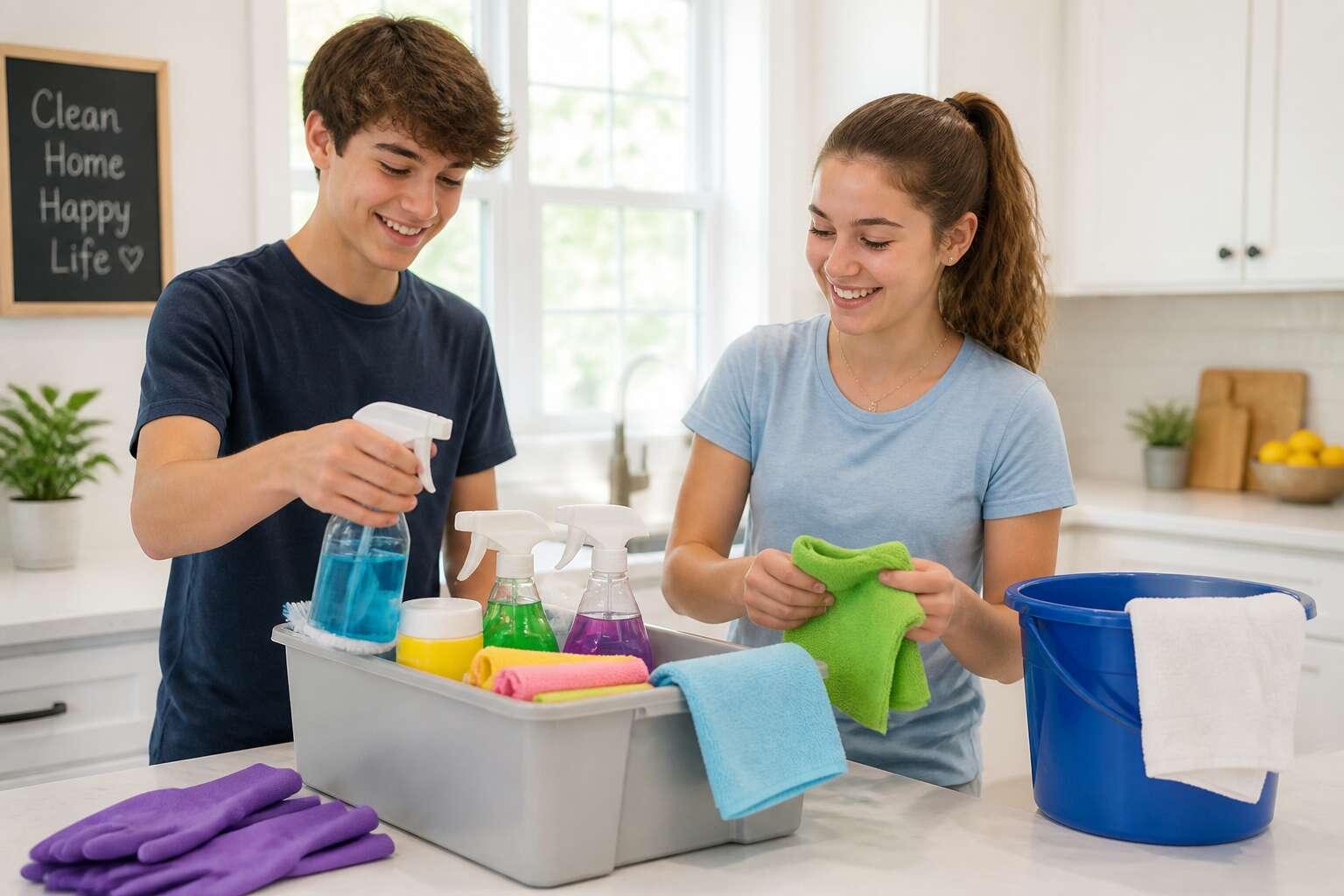
Why Cleaning Work Is a Smart Choice for Teenagers
Developing Valuable Life and Work Skills
Teenagers often hear that sweeping floors and scrubbing sinks builds character. They rarely hear that it builds a bank balance too, which makes the advice far more palatable. The beauty of cleaning jobs for teens is that they hand over immediate responsibility. You finish a task, see the result, and get paid. That loop teaches a work ethic faster than any career day lecture.
Beyond the cash, these roles are a crash course in time management. You learn to juggle homework, social life, and a shift without losing your mind. The skills stick with you:
- Reliability, because clients notice when you skip a spot.
- Initiative, since no one wants to babysit you through a mop.
- Communication, when you have to explain why the stain refused to budge.
South African teens also pick up a practical sense of logistics. Finding transport to a client in Johannesburg or managing petrol money on a small wage is its own lesson in survival. One day you are tidying a desk; the next you are budgeting for load shedding. These experiences compound, making you resourceful in ways a classroom never can.
Quick Entry with Minimal Experience Required
South Africa’s informal economy opens its doors to young workers without demanding a pristine CV. A bucket, a bottle of bleach, and a willingness to learn are enough to begin earning. Cleaning jobs for teens often start with a simple WhatsApp message to a neighbour or a notice pinned to a community board.
The barrier to entry is remarkably low. There is no interview gauntlet, no technical assessment, just a trial shift and a watchful eye. Consider the typical first roles:
- Domestic helper for a weekend.
- Car wash assistant at a local garage.
- Garden and patio sweeper for elderly residents.
Those positions teach the rhythm of work from the first hour. You learn to assess a space, to find dirt where others see none, and to leave a room transformed. The pay may start small, but the entry point is wide open, welcoming any teenager with gumption and a phone number to call!
Best Cleaning Roles for Young Professionals
Residential House Cleaning Gigs
House cleaning gigs are the backbone of the teen work economy, and for good reason. Homeowners in South Africa are perpetually seeking affordable, reliable help, and you represent a cost effective solution. You might be surprised to learn that the average teen cleaner can earn up to ZAR 1,400 for a solid weekend of work. That is real money for manual labour, and it does not require a degree in chemistry to figure out which spray works on glass.
The market has shifted beyond the casual “lend a hand” scenario. Many parents now prefer booking teens through formal channels, such as local neighbourhood groups or digital marketplaces, to ensure accountability. This formality offers you a distinct advantage: structure. You are not just a random kid with a mop; you are a service provider with a schedule.
When you enter this arena, you typically choose between two primary models:
– Independent Contractor: You source your own clients, set your own rates, and handle your own invoicing.
– Agency Employee: You join a small cleaning enterprise that assigns you to residential properties on a roster basis.
Opting for the independent route maximises your hourly rate, but the agency route provides a safety net when a client cancels. Most teens begin independently to build a portfolio of testimonials, which is your strongest currency in this trade.
Beyond the standard sweeping and dusting, specialised services are your ticket to higher earnings. For instance, offering a “post-construction clean” for newly renovated homes or a “deep clean” for springtime generates significantly more revenue than a standard weekly tidy. These tasks involve meticulous attention to detail, such as scrubbing grout or polishing fixtures, which justifies a premium price.
You might be surprised to find that many older clients simply want company while you work. They often request a specific playlist on the speaker while you handle the heavy lifting, turning a mundane job into a social interaction. This rapport encourages recurring bookings, which equates to financial stability. Just remember to clarify the scope of work before you start, because one person’s “clean” is another’s “total sanitisation project.” Avoiding that misunderstanding ensures you leave with a smile and a full wallet.
Commercial Store and Office Cleaning
Commercial store and office cleaning introduces a different cadence. Instead of private homes, you work in spaces where systems matter. Many shopping centres in Johannesburg hire teens for overnight shifts, which means less foot traffic and higher efficiency. These roles often come with a fixed schedule, so you can plan your studies around them.
Common duties include:
- Emptying bins and sorting recyclables
- Sanitising high-touch surfaces like lift buttons and door handles
- Machine polishing floors or vacuuming open-plan areas
Cleaning jobs for teens in this sector frequently lead to permanent part-time work. Retail chains value reliable staff who understand basic hygiene standards. You also gain exposure to industrial equipment, from floor buffers to steam cleaners, which adds a technical edge to your CV.
Window Washing and Exterior Services
Walking past a glass storefront in Sandton, you might not notice how much effort keeps those panes streak free. Window washing and exterior services offer some of the most physically rewarding cleaning jobs for teens. The work happens outdoors, which means fresh air and a different rhythm.
The skills are straightforward to learn. A squeegee, a ladder, a bucket of soapy water, and you are ready. Many property managers in Johannesburg and Cape Town hire teens for weekend facade cleaning, especially for ground floor retail units and small office blocks.
- Washing ground level windows with telescopic poles
- Pressure washing walkways and tiled areas
- Clearing leaves and debris from gutters
These jobs build confidence with height and equipment. They also set you apart from other cleaning jobs for teens because clients see immediate results. A clean storefront invites customers, and business owners notice that impact.
Pet Waste Removal and Yard Cleanup Services
Pet waste removal sits at the bottom of many young job seekers’ lists. That is precisely why it pays well! Homeowners in Durban and Pretoria often pay premium rates for someone who will arrive on schedule and actually do the work without complaint.
Yard cleanup extends beyond picking up after dogs. It means raking leaves, clearing fallen branches, and tidying garden borders before the rainy season arrives. The work is physical and straightforward.
A typical weekend round might include:
- Walking a property and identifying all waste areas
- Bagging pet waste and disposing of it properly
- Raking and collecting leaves from lawns and driveways
- Sweeping patios and pathways
Teens who build a reputation for reliability in this niche rarely lack clients. Many cleaning jobs for teens vanish during winter, but yards generate waste all year. These cleaning jobs for teens also offer a degree of autonomy that indoor work rarely matches.
Where and How Teens Can Find Cleaning Work
Community Bulletin Boards and Local Hubs
Much cleaning work never gets advertised online. The real marketplace is on cork boards at your local library, the notice wall at the supermarket, and the front window of the corner café. These spots remain a strong channel for finding cleaning jobs for teens in South African suburbs.
Common local hubs for this work include:
- community centres
- church notice boards
- sports club facilities
- spaza shops
Check these boards once a week. People still pin handwritten cards asking for help with general cleaning. The shopkeeper or librarian often knows who is looking for a helper, and I have found that a simple card with a name and number gets noticed.
Family, Friends, and Neighbor Referrals
While the bulletin board remains a classic, the true unadvertised economy for cleaning jobs for teens thrives in your immediate circle. Your mother’s book club, your father’s golf buddy, or your uncle’s office manager are all potential clients. They have seen you grow up, which means they trust you more than a stranger. This trust is your currency. When you ask for referrals, you are not begging. You are offering a solution to their untidy homes.
To get the ball rolling, you need to make your availability known. Speak up at the braai. It is that simple. You should not wait for people to ask. Tell them you are ready to work. A specific request works better than a general one.
– Ask specific neighbours if they need help with their weekly dusting.
– Mention your service to your parents’ friends who complain about their busy schedules.
– Offer a free trial session to a family member to showcase your skills.
This approach often leads to a steady flow of work. I remember one teen who landed a regular weekend gig simply by offering to clean a neighbour’s garage while they were on holiday. The neighbour returned to a spotless space and recommended him to three other families. The key is to be polite but direct. People appreciate a young person who is proactive. The resulting work is usually more relaxed and pays better than commercial gigs. You are a known quantity, so the pressure is lower, but the expectation for quality remains high. Statistics show that 70% of job vacancies are never publicly advertised. The same logic applies to the informal cleaning market.
Direct Outreach to Local Businesses
Most business owners do not advertise their cleaning needs. They notice dust and smudges only when a client comments, and by then the moment has passed. That gap exists because owners are busy. A polite, face-to-face question can create cleaning jobs for teens that no online portal will ever list.
Walk into a neighbourhood bakery, an art gallery, or a bike repair shop between 10am and 2pm. Ask for the owner. Skip the broad offer. Point to a specific scuffed skirting board or a dusty display stand and describe what you would do about it. The conversation becomes concrete.
These direct conversations produce cleaning jobs for teens with better pay than advertised positions. The owner does not compare you to a company. They compare you to the hassle of solving the problem alone. Your directness wins.
Spotting Help Wanted Signs in Storefronts
A printed sign in a window is the oldest job advertisement that still works. Shop owners in South Africa tape paper to glass, then ignore it for weeks. That paper hides cleaning jobs for teens that never reach online portals.
Walk down main roads and scan the bottom corners of windows, the edges of doors, and the notice boards near entrances. “Assistant wanted” often means wiping shelves, sweeping floors, and emptying bins. The role looks broad, but the cleaning part is real.
- Bakery display windows
- Hair salon mirrors
- Auto repair shop front doors
A sign that stays up for a month might refer to a filled position. Ask anyway. The owner compares you to the hassle of hiring again. Your timing can turn a stale sign into a paid cleaning shift.
Legal Rules and Limits for Teen Cleaners
Age Thresholds and Work Permit Essentials
In South Africa, the law draws its lines with blunt severity. A child under 15 cannot work, no exceptions. At 15, cleaning jobs for teens become legally possible, but a document stands between them and payment. The Department of Employment and Labour requires every young worker to hold a valid work permit. The permit is not a formality. It protects the teen from exploitation and the client from prosecution.
Getting one requires three components:
- Parental or guardian consent
- A medical certificate confirming the teen’s fitness
- The employer’s signed undertaking to meet labour conditions
All three are mandatory. Missing one voids the application. I have seen teens assume a handshake is enough. It is not. Owners who hire without this paperwork face serious fines. The law does not bend for weekend gigs or pocket money arrangements.
Hour Restrictions During School and Vacation
The law keeps a tight grip on how many hours a teen can clean during term time. On a school day, a 15 year old may work only two hours, and only after the final bell. Weekend hours are more generous, up to eight hours, but only if the work does not cut into rest.
Cleaning jobs for teens shift into a different rhythm during school holidays. Vacation periods extend the daily limit to eight hours, and the week opens up fully. Still, every hour must be recorded. Employers who push beyond these limits face penalties. For families hiring cleaners, knowing these boundaries matters as much as the wage.
- Two hours maximum on a school day
- Eight hours maximum during holidays
- No work between 20:00 and 06:00
These restrictions protect a teenager’s health and education. Cleaning jobs for teens only remain a fair option when the hours respect the law.
Prohibited Tasks and Chemical Safety Rules
The legal boundaries for teen employment extend beyond the clock and into the very nature of the work itself. Labour regulations in South Africa identify specific tasks as categorically off-limits for individuals under 18, regardless of parental consent or the perceived safety of the assignment. These prohibitions exist because the adolescent body and developing mind remain vulnerable to hazards that an adult might navigate without a second thought.
For a teen seeking cleaning jobs, the restricted list often includes operating industrial floor buffers or carpet extraction machines, handling any equipment with a blade, and working from heights above two metres. The rationale is not bureaucratic stubbornness. It is a statistical acknowledgement of where workplace injuries cluster. A residential homeowner asking a teenager to climb a ladder to clean gutters is unknowingly requesting an illegal act, and the teen accepting it bears no legal fault, but the adult certainly does.
Chemical safety rules carry their own gravity. Many household and commercial cleaning agents contain volatile organic compounds, alkaline corrosives, or solvent bases that can trigger respiratory distress or contact dermatitis in younger workers. The law insists that any cleaning jobs for teens involving chemical agents, even dilute bleach solutions, require formal training in handling, dilution ratios, and emergency rinsing protocols.
- Always read the safety data sheet before opening a container
- Never mix ammonia-based products with chlorine bleach
- Wear nitrile gloves, not latex, for chemical resistance
- Report any spill immediately rather than attempting a solo cleanup
The employer, whether a private family or a franchise operation, must provide personal protective equipment at no cost to the minor. Many well-intentioned parents assume common sense suffices, but common sense does not account for the aerosolised particulates that linger in a closed room long after the scent fades. For the teen, the hard lesson is this: accepting a task without questioning its legality or its chemical footprint is not diligence, it is a gamble with a body that has decades of use ahead of it.
Key Skills That Turn Teen Cleaners into Standout Workers
Mastering Time Management and Routine
When you hold a spray bottle in one hand and a stopwatch in your head, you become the captain of your own mini enterprise. Timing transforms tedious tasks into a satisfying race against the clock. Teens who thrive in cleaning jobs for teens often build a mental map of their route, knowing that the bathroom takes twenty minutes and the kitchen needs thirty. This rhythm prevents lagging and turns a full house into a finished job.
A simple routine acts as your secret navigation system. You start with the dustiest surfaces, work top to bottom, and leave the mopping for last. Structure reduces friction, so you never stand still wondering what comes next.
– Block out tasks by room or zone
– Estimate a time for each block and stick to it
– Keep your supplies in a portable caddy for quick changes
This kind of planning not only speeds up the work but also builds reliability. Homeowners notice when a cleaner arrives on schedule and leaves the space gleaming without constant reminders. Mastering these rhythms sets you apart from others who simply wipe and hope. In the end, your routine becomes your reputation, and your reputation opens doors to more cleaning jobs for teens across your neighbourhood. Every tick of the clock is a step toward a polished finish and a client who trusts your pace.
Practicing Clear Communication with Clients
Speaking with clients transforms a teenager from a silent task-doer into a trusted professional. When you arrive, greet the homeowner and confirm which rooms need attention. Ask about fragile items or areas that require special care. This short conversation prevents misunderstandings and shows that you respect their space.
Throughout the work, offer brief updates. A simple sentence can reassure the client while you work. If you spot a problem, a stained carpet or a leaking tap, report it promptly. This honest communication builds confidence and often leads to repeat bookings. Teenagers who master this skill gain a distinct advantage. Practical conversations create satisfied customers, and satisfied customers pass along your name. Cleaning jobs for teens flourish when people know they can rely on you to listen and respond. In this way, the spoken word becomes your greatest tool, opening doors that a mop alone cannot reach.
Using Cleaning Supplies and Tools Safely
Proper handling of cleaning supplies and tools separates a reliable teen worker from a liability. A spray bottle in unprepared hands can damage a client’s furniture or trigger a chemical reaction. The right dilution, the correct cloth for each surface, and the careful storage of equipment are skills built through deliberate focus. Cleaning jobs for teens thrive when parents see their child treat products with genuine respect.
I have watched young cleaners earn trust by the way they manage a vacuum cord or rinse a mop head between rooms. They understand:
– Which product tackles lime scale and which one strips wax
– Why a microfibre cloth outperforms a rag on glass
– When to ventilate a small room while using a stronger solution
This competence protects the property, the customer, and the worker. Clients notice when a teen arrives with the right gear and the knowledge to use it properly.
Paying Attention to the Small Details
When a teen notices the dusty baseboard behind the toilet, they have moved beyond basic cleaning. That observation separates a standout worker from someone who simply wipes surfaces.
Small details include checking corners for cobwebs, aligning bottles on the shelf, or resetting cushions. Clients remember these gestures! They see care.
- Wiping light switches and doorknobs
- Folding towels with the label facing down
- Replacing trash bin liners so they do not peek over the rim
For cleaning jobs for teens, I have watched this attention build a reputation. One client talks to another. The result is steady work from people who trust your eye.
Building Trust Through Consistency
Reliability is rare in the cleaning industry. When a teen shows up on time every week, clients take notice. Consistency matters more than speed. A client needs to know the kitchen will shine after each visit. That certainty builds trust. Over time, you become a fixture in their routine.
One way to demonstrate consistency is to follow the same checklist. This ensures no corner gets missed. Use a simple system:
- Arrive five minutes early
- Complete the same tasks in the same order
- Confirm completion before leaving
When clients see this pattern, they refer you. For cleaning jobs for teens, steady habits create a loyal customer base. Trust turns a one time gig into regular work.
Handling Difficult Requests Gracefully
A client once asked a teen cleaner to rearrange furniture before mopping. That request was not in the standard checklist. Handling such moments requires calm thinking and a readiness to adapt. For cleaning jobs for teens, the ability to say yes when safe, or to politely explain limits, sets you apart. I’ve watched this skill turn a nervous teenager into a confident worker.
Difficult requests often come with tight timelines or unusual spaces. A teen who listens carefully and asks one or two clarifying questions shows respect. That skill matters more than speed! Consider these tactics:
- Repeat the request back to confirm understanding.
- Suggest a safer alternative if the original ask involves risk.
Clients remember how you respond. A graceful response turns a tricky situation into a repeat booking. Strong communication is a skill that carries beyond cleaning, and it builds a reputation that parents and neighbors talk about.
Turning a Teen Cleaning Gig into a Thriving Micro-Business
Creating a Simple Service Menu and Pricing
Turning a weekly chore circuit into a micro-business depends on one artefact: a service menu that looks like it was drafted by someone who respects their own time. Most teenagers undercharge because they mistake speed for simplicity. Write down three distinct offerings, such as:
- The Standard Reset: surface wiping, floor sweep, rubbish removal
- The Deep Grind: baseboards, appliance fronts, door handles
- The Post-Party Resurrection: sticky patches, stains, and odour control
Then attach rand values that account for travel time and product costs. Hourly pricing suits uncertain scope. Per-room pricing rewards efficiency. Many cleaning jobs for teens stumble because the price is a mumbled guess. Fixed prices prevent awkward negotiations. Laminated cards help too. A printed tariff stops the debate before it starts, and it positions a teenager as a proper service provider rather than a neighbour’s helper.
Marketing with Printable Flyers and Local Social Media
Once the service menu is set, the next move is making sure the right people actually see it. Printable flyers still work remarkably well in South African neighbourhoods, especially near schools, community halls, and local shops. A single bold design with tear-off contact tabs can spark more curiosity than a generic social media post.
Pair that with local social media like neighbourhood WhatsApp groups or a dedicated Facebook page. Show before and after photos of real cleanups, keep the tone friendly, and respond fast. A practical combination looks like this:
- Print 50 flyers and distribute them strategically
- Post once a week with a clear call to action
- Ask happy clients to share your number
That mix turns a one off favour into word of mouth momentum. For teenagers, cleaning jobs for teens become a thriving micro-business when marketing feels local and personal.
Balancing School Commitments and Client Demands
A teen cleaning gig becomes a micro-business when school commitments set the boundaries for client appointments. Most learners have fixed free hours after school and weekends. Treat these hours as your official business hours.
Clients need to know about exam weeks and sports fixtures before they book. Tell them that Monday afternoons are unavailable during exam season and Saturday mornings open up instead. Clients respect a young cleaner who plans ahead.
- Publish your weekly availability every Sunday
- Reserve one day for school assignments
- Confirm each job 24 hours in advance
This structure allows cleaning jobs for teens to grow without letting cleaning work crowd out classroom responsibilities.
Expanding Services and Collecting Reviews
A single online review can triple a small business’s enquiry rate, yet most teen cleaners never ask for one. Cleaning jobs for teens often begin with basic tasks, but a thriving micro-business hinges on expansion. Offer add-ons like fridge organisation or window spot cleaning. These smaller tasks generate extra revenue without adding major time.
Reviews act as your shop window. One polished testimonial can outweigh ten flyers. After each appointment, ask your client to rate your work on a platform like Nextdoor or even WhatsApp status. You might also create a simple feedback card.
- List your new services with clear pricing.
- Request reviews within 24 hours of the job.
- Display the best reviews in your service menu.
This approach turns one-off gigs into a referral engine, where every satisfied client promotes your reliability. Those positive reviews will generate more cleaning jobs for teens.



0 Comments