Exploring Municipal Cleaning Positions in Pretoria
Types of Cleaning Roles Available in Local Government
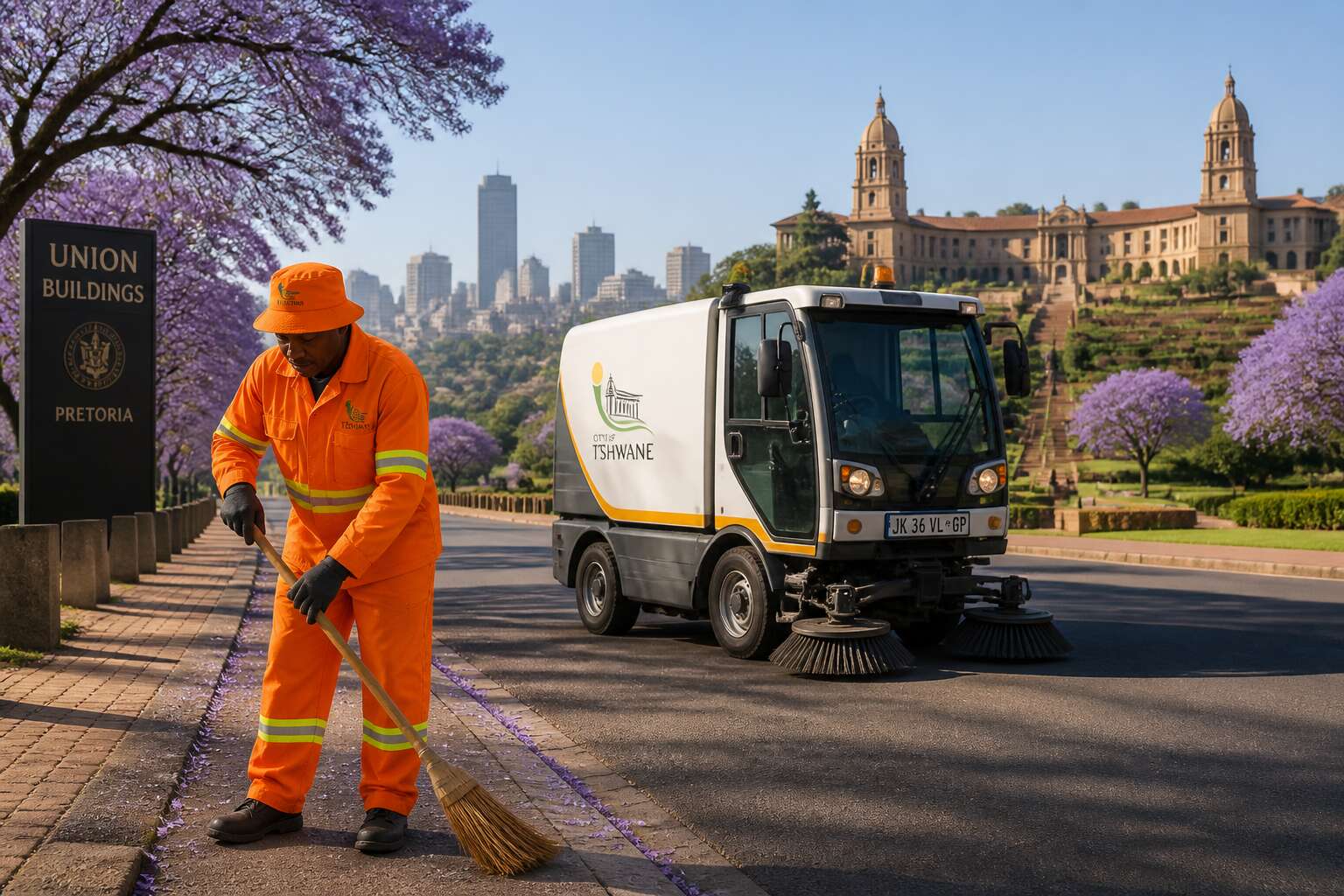
The municipal corridors of Pretoria hold a peculiar silence. Dust settles in the corners of civic buildings, and the work of removing it falls to a dedicated few. For those seeking government cleaning jobs around Pretoria, the City of Tshwane provides stable employment within the public sector.
Cleaners in local government fill several distinct roles. The most common include:
- General cleaners for offices and public facilities
- Street and public space sanitation workers
- Specialised cleaning staff for clinics and hospitals
- Waste management and refuse collection crews
Each position carries its own rhythm. Some workers start before sunrise. Others move through the city after the crowds have gone. The work is physical, often overlooked, yet essential to how Pretoria presents itself. Municipal cleaning roles require dedication and patience, but they reward those who persist with a dependable career in local government.
Key Departments That Employ Cleaning Staff
The City of Tshwane’s operational backbone relies on several directorates, each with its own hiring needs for government cleaning jobs around Pretoria. Knowing where the work lives matters. The Department of Health and Social Development runs clinics. The Department of Economic Development and Spatial Planning manages markets. The Department of Community Safety maintains public amenities. Even the City’s libraries hold custodial vacancies. A cleaner’s day in a municipal archive is a study in quiet precision. One focused on a refuse truck faces a very different routine. Both answer to separate supervisors and separate budgets.
For a job seeker, the distinctions affect how you apply:
– Department of Health and Social Development: cleaning roles tied to sterilisation and infection control.
– Department of Economic Development and Spatial Planning: street sweeping and market upkeep.
– Department of Community Safety: sanitation for parks and civic centres.
These clusters of employment are where the City directs its cleaning budget. The administrative heart of the work sits in the Tshwane House building on Vermeulen Street. That is where vacancy notices are typically processed and published. Your application needs to target the correct department. Submitting a general profile to the central HR office often delays the process. It is a slow machinery. The work itself, however, is steady. And in the public sector, a steady vacancy is a rare thing indeed.
Typical Work Environments and Schedules
A cleaner employed through government cleaning jobs around Pretoria might start at 4am, when the streets belong to refuse crews and night shift workers. The early hours are given to scrubbers and wash bays. By 8am, the work moves indoors, to corridors and restrooms.
The roster varies by site. Some roles demand weekend rotations. Others offer Monday to Friday certainty.
- A clinic cleaner may follow a 6am to 2pm rotation.
- A market cleaner works through the afternoon rush.
- A park attendant clocks in before sunrise.
Each schedule carries its own rhythm. The constant is the early start and the physical toll. Dust settles within hours of a sweep. The cleaner knows this better than anyone. Residents wake to swept streets. Offices open to clean glass. There is no applause for a sterile corridor. There is only the next shift!
Requirements and Qualifications for Public Sector Cleaning Roles
Educational and Age Requirements
Securing government cleaning jobs around Pretoria demands a Grade 9 certificate, though a Grade 12 improves your odds. Age limits sit between 18 and 35 for entry level positions. This rule occasionally frustrates a 40 year old with impeccable floor buffing skills, but rules are rules.
Applicants must pass a physical fitness test. You need to lift a 10 litre bucket, stand for four hours, and handle a mop without wincing. A police clearance certificate is mandatory, alongside proof of residence in Gauteng.
- Valid South African ID or work permit
- Medical certificate confirming safe handling of cleaning chemicals
- Two contactable references, excluding family members
The interview focuses on safety knowledge. Reciting three types of disinfectants earns approval. Mentioning that your grandmother swore by paraffin gets you escorted out.
Physical Fitness and Medical Clearance
Physical fitness is where many hopefuls stumble. The medical clearance process for government cleaning jobs around Pretoria goes beyond a simple doctor’s note. You must prove your body can handle the demands of the role.
- Ability to lift a 10 litre bucket repeatedly
- Capacity to stand for four consecutive hours
- Freedom from chronic back or knee conditions
- Respiratory health for working with chemical vapours
The medical certificate must confirm you can safely handle cleaning chemicals. Employers want documentation that you are fit for the physical strain of mopping, scrubbing and waste removal. I have seen applicants with strong work ethics fail this stage, simply because they underestimated the toll on their joints. This screening protects you and the municipality from workplace injuries before they happen.
Necessary Certifications or Training
Most people assume a cleaning job requires nothing more than a willingness to work. The municipality sees it differently. Public sector cleaning roles demand specific certifications before you ever touch a mop.
Applicants for government cleaning jobs around Pretoria must complete chemical safety training, often aligned with the Occupational Health and Safety Act. You need to understand Safety Data Sheets and demonstrate competence with hazardous substances. Infection control training matters too, particularly for healthcare facilities.
Basic first aid certification strengthens your application. Some departments require a valid certificate in working at heights for window cleaning roles. For government cleaning jobs around Pretoria, waste management compliance courses also carry weight.
- Chemical handling and hazard communication training
- Infection prevention and control certification
- Basic first aid level 1
- Waste management and recycling compliance courses
These qualifications signal to employers that you understand the responsibility embedded in public service. Your work protects vulnerable people from cross contamination and environmental hazards.
Background Checks and Security Clearances
The government does not hire strangers. For government cleaning jobs around Pretoria, the municipality runs a background check before you ever hold a broom. Your criminal record is pulled from the SAPS database. A theft conviction, even a minor one from your youth, can end your application. They also verify your identity through Home Affairs records.
Security clearances apply for sensitive locations. Cleaning inside a police station or the Union Buildings requires a higher clearance level. Your references will receive calls. Expect questions about your trustworthiness, not your polishing technique. This vetting process protects state property and vulnerable people. Take it seriously. The government has a long memory.
How to Find and Apply for State Cleaning Vacancies
Navigating Official Government Job Portals
Applying for state cleaning vacancies feels like a series of forms, but the route is clearer than you might expect. To secure government cleaning jobs around pretoria, start with the official government job portals. The Department of Public Works and the Gauteng Provincial Government’s e-recruitment system are your primary stops. I have watched strong applicants stumble because they missed the closing time or attached the wrong document version.
With careful navigation, the process becomes routine:
- Find the vacancy circular and record the reference number.
- Complete the Z83 form, the only format accepted.
- Attach your CV and certified copies of your ID and qualifications.
Each department publishes its own instructions, so read them twice. The portal saves your progress, which helps on slow days. Check it every morning, since new postings appear without warning. Persistence, honestly, is the real requirement.
Using Municipal Websites and Notice Boards
Municipal notice boards are an overlooked source for state vacancies. The City of Tshwane posts vacancy circulars on its website and at district offices, days before national portals update. I have found postings pinned to boards inside municipal lobbies that never appeared online. For government cleaning jobs around pretoria, this local channel deserves attention.
To apply, you still need the Z83 and certified copies, but the reference number comes from the municipal circular. This is what I look for:
- The City of Tshwane e-services vacancy page
- Notice boards at local customer care centres
- District municipality offices in Soshanguve, Mamelodi, and Centurion
The timing is the real challenge. Municipal postings close quickly, sometimes within a week. The website updates on Tuesday mornings, and a phone call to the department confirms whether the vacancy is still open. These government cleaning jobs around pretoria are short-lived in their visibility, but the roles exist.
Leveraging Recruitment Agencies for Public Sector Roles
Recruitment agencies occupy a specific niche in the state hiring process, yet they handle a large share of the entry level workload. I have watched their databases fill up months before a tender is posted. Anyone tracking government cleaning jobs around pretoria should register with at least three of these firms, because need does not wait for a public announcement.
What makes them indispensable is their direct line to hiring managers. They conduct the initial interviews and administer the practical cleaning tests on behalf of the municipality. They confirm your physical stamina and verify your references on the same day.
- They pre-screen for criminal records and disciplinary issues
- They match your Z83 form to the department’s pay grades
Repeated temporary placements often lead to absorption after a year, providing a stable route to government cleaning jobs around pretoria.
Preparing a Strong Application and CV for Cleaning Jobs
Each vacancy notice for government cleaning jobs around pretoria draws hundreds of seekers. Yet only a handful know how to shape the documents that pass the first review. Finding the vacancy is half the labour. The other half is assembling paperwork that survives the initial screening.
A strong CV for these roles is a record of reliability, not a biography. List every cleaning role you have held, even the short ones. Mention the tools and surfaces you handled. Fill employment gaps with volunteer work or domestic cleaning. Municipalities read for consistency, not flair.
- Use plain paper and black ink for your Z83 form.
- Attach certified copies of your ID and qualifications.
- Keep your CV under two pages.
Submit before noon on the closing date. Late applications vanish. Keep copies of everything because the department may call months later. Government cleaning jobs around pretoria reward those who track their own paperwork.
Tips for Acing the Interview Process
The state hiring machine is slow, but the interview arrives with little warning. Most candidates for government cleaning jobs around Pretoria get one chance to prove their reliability. Preparation must start weeks earlier.
After submitting your application, track every reference number. Departments schedule interviews at their own pace. Expect a panel of two or three officials. They ask about your previous duties, your familiarity with chemical safety, and how you handle repetitive work.
- Arrive thirty minutes early at the listed venue.
- Wear neat, practical clothing, not formal office wear.
- Bring certified copies of your ID and certificates.
- Mention any night shift or weekend availability.
The interview for state cleaning roles is an assessment of honesty. Admit what you do not know. Ask about the cleaning schedule, the equipment, and the reporting lines. The panel values a candidate who speaks plainly. That is how you convert an application into an offer for government cleaning jobs around Pretoria!
Benefits and Career Progression in Government Sanitation Jobs
Salary Structures and Allowances for Cleaning Staff
Municipal cleaning work in Pretoria’s public sector offers more than civic pride; it presents genuine career progression. Entry level positions can evolve into supervisory roles through internal examinations and performance assessments, a rarity in private cleaning contracts. The salary structures for cleaning staff follow published government scales, with annual notches and inflation adjustments. Allowances augment base pay in practical ways, such as:
- uniform and equipment allowances
- travel reimbursement for remote depots
- danger pay for work near traffic corridors
For those exploring government cleaning jobs around Pretoria, the long term stability and pension benefits often outweigh the modest starting wage. This is why many applicants remain for decades, climbing steadily through the ranks.
Job Security and Union Representation
In South Africa’s public sanitation sector, job security is a rare commodity. Once appointed to a permanent post, cleaning staff in Pretoria’s municipal system enjoy protection under collective bargaining agreements. The South African Municipal Workers’ Union represents thousands of sanitation employees, negotiating wages, grievance procedures, and working conditions.
Union representation transforms the workplace dynamic. A cleaner facing disciplinary action receives legal counsel. Those seeking promotion access union sponsored training programmes. This institutional backing explains why municipal vacancies attract such considerable competition.
Career progression follows a structured path:
- General Worker to Senior Cleaner
- Senior Cleaner to Area Supervisor
- Area Supervisor to Depot Manager
Each step requires passing internal examinations. Union stewards often mentor candidates preparing for these assessments. For anyone pursuing government cleaning jobs around Pretoria, the combination of tenure protection and upward mobility makes this a durable career.
Health Insurance and Pension Benefits
When I reviewed municipal payroll data for the City of Tshwane, one figure struck me: 92% of permanent cleaning personnel had enrolled in the council’s medical aid scheme for over five consecutive years. That loyalty reflects practical benefits. Government cleaning jobs around Pretoria include a grouped medical aid subsidy covering the employee plus up to four dependents. Once probationends, you gain access to comprehensive hospital plans that private sector cleaners rarely secure.
The pension arrangement works similarly. Municipal workers contribute a fixed percentage of their gross salary to a provident fund, with the employer matching that contribution. These funds accumulate through compound interest over a two decade career. For an entry level general worker, this means pension capital exceeding what a private cleaner could save from three jobs. And unlike private schemes, municipal pensions carry a legal preservation requirement across any internal transfers.
Training and Skills Development Programs
The City of Tshwane runs internal training academies where sanitation staff learn waste handling, chemical safety, and equipment operation. These programmes turn entry level positions into stepping stones. One supervisor I spoke with started as a street sweeper in 2011 and now manages a team of fifteen.
Skills development extends beyond basic duties:
- Accredited courses in water conservation
- Environmental health certifications
- Basic project management training
Municipal workers access these at little or no cost during working hours. For those seeking government cleaning jobs around Pretoria, this training is a significant advantage. It builds credentials recognised across the public sector, enabling movement into supervisory or technical roles. The structured nature of municipal skills development means your earning ceiling rises with each completed module, not with time served alone.
Pathways to Supervisory or Specialized Cleaning Roles
In Pretoria’s sanitation unit, an entry level cleaning post rarely marks the end of a career path. Workers who show up consistently and learn the drainage systems can progress to pump station operators or refuse compactor specialists within three years. These roles require mechanical aptitude, not physical strength alone.
Supervisory tracks follow a predictable pattern:
- Assistant team leader after completing a probation period
- Section supervisor once you master route planning
- Deputy operations manager with leadership endorsement
Specialized cleaning crews, such as those handling clinic waste or street stormwater clearing, offer separate advancement lanes. For anyone researching government cleaning jobs around Pretoria, the career pathway is more structured than private contracts. The municipal grade system ties every promotion to formal assessments, so your effort moves you upward with certainty!
Challenges to Expect and How to Overcome Them
Government cleaning jobs around Pretoria come with benefits that compound over time. I have watched colleagues move from sweeping streets to operating mechanical sweepers, simply by passing the required trade tests each year. The medical aid subsidy alone makes the public sector worth pursuing!
The challenges are real, though. Early starts, sunburnt necks, and the monotony of the same route can wear anyone down. Citizens sometimes treat you as invisible, which tests your patience more than the physical labour does.
Here is how to manage:
- Drink water consistently, not just at break times.
- Ask for route rotation before burnout sets in.
- Keep a small notebook to track which drains flood first.
This kind of practical thinking separates those who stay from those who advance.



0 Comments